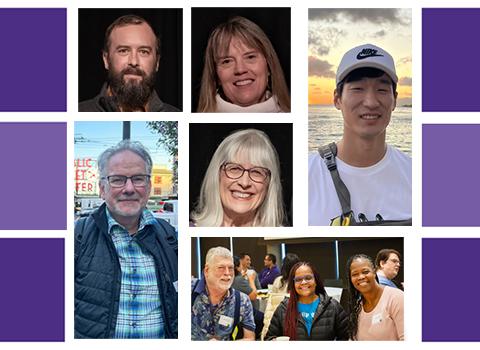
Congratulations, 2026 UWF graduates
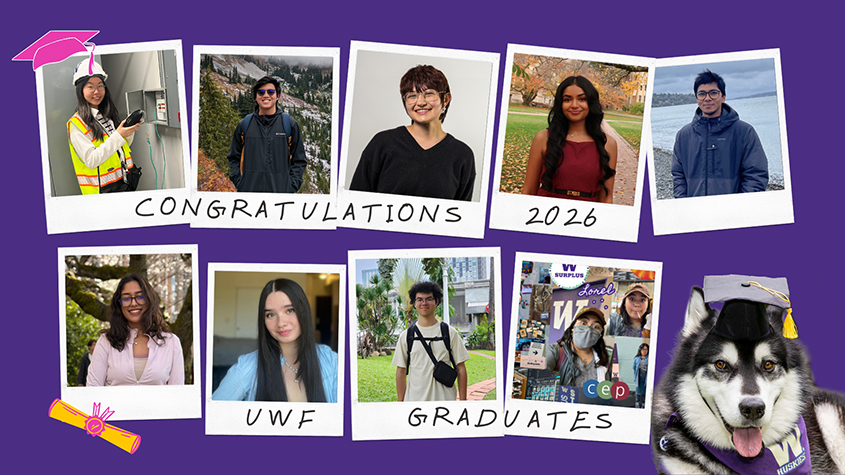
Clockwise from top right: Victoria Zhuang, Dzaki Pahlevi, Lee Hardisty, Risha Ashwin, Aashish Singh, Lorel Ramirez, Brandon Phung, Brianna Blanchard and Avantika Sharma. Not pictured: Maddy Laoprasert.
Student employees and interns are an important part of UW Facilities, helping with day-to-day operations as well as independent projects and outreach. An internship or student job in one of UWF's units can help students put what they learned into practice, and for some of them, it's a welcome activity separate from their studies.
We asked a few of our graduating student employees and interns about their Facilities experience. All interviews have been edited for length and clarity.
- Aashish Singh / Transportation Services
- Avantika Sharma / Business Innovation & Technology
- Brandon Phung / Transportation Services
- Brianna Blanchard / Sustainability
- Dzaki Pahlevi / Campus Energy, Utilities & Operations
- Lee Hardisty / Sustainability
- Lorel Ramirez / Surplus
- Maddy Laoprasert / Campus Sustainability Fund
- Risha Ashwin / Business Innovation & Technology
-
Victoria Zhuang / Business Innovation & Technology
Aashish Singh
Academic program: Graduate, Information Management
Where they worked: Transportation Services
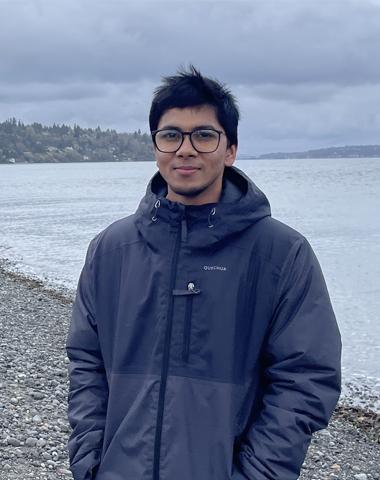
Aashish Singh at Discovery Park
Tell me about yourself. Where are you from and what are you studying?
I am originally from New Delhi, India. I completed my undergrad in 2021 and then worked as a software engineer in India. While working, I became increasingly interested in how technology and business decisions work together to solve real-world problems. That interest led me to pursue a master’s degree in Information Management at the UW. And UW has one of the top Information Management programs in the world, and I felt it was the ideal place to build both my technical and business skills.
What are you interested in doing for your career?
As I mentioned, before coming to UW, I was working as a software engineer. During that time, I saw how much the industry was changing, especially with the growth of AI and machine learning. I had always been interested in this space, and I wanted to learn more about it beyond traditional software engineering. I’m also interested in getting closer to the product side and understanding how solutions are built from scratch. Going forward, I’d like to work in AI-focused product development. In the future, I’m also interested in entrepreneurship and would love to build something of my own.
What did you do in your student position?
I work as a Student Assistant in the Sales and Administration team at UW Transportation Services. Most of my responsibilities involve handling administrative tasks. I issue and mail AVI cards and process returned mail. I also answer customer inquiries through email and manage Salesforce tickets. Additionally, I handle various in-office tasks, such as printing placards, mailing citations and filing manual citations in Flex.
Beyond my regular tasks, I also worked on some additional projects. One of them involved linking vehicles to the correct customer accounts to improve data accuracy. I also worked on researching issues that customers were facing with Transportation Services by analyzing discussions posted on Reddit. Currently, I’m working on a project focused on enhancing the parking allotment page and making the data more organized and structured.
How has this job prepared you for what's next?
Most of my previous experience was in software engineering, so my focus was primarily on technical work. Through this role, I got the opportunity to develop a different set of skills. I learned a lot about communicating with customers and handling their concerns professionally. It also improved my attention to detail because even small mistakes can have a direct impact on the customer experience. My previous roles were mostly focused on developing technical skills, but this role helped me develop professional and managerial skills as well. In terms of technical skills, I also got the chance to learn tools like Salesforce and Flex, which were completely new to me.
I've also learned a lot from my colleagues. They not only helped me understand the job better but also helped me adapt to life and work in the United States. Beyond that, they played a big role in my overall growth as a person.
Anything else we haven't talked about that you'd like to mention?
This was my first time living outside India and my first time in the United States. One thing that really stood out to me was how welcoming and inclusive everyone was. From the beginning, people made me feel comfortable and part of the team. The work itself helped me develop many of the skills I mentioned earlier, but beyond it I also had the opportunity to learn about different cultures, experiences and perspectives through the people I worked with. I'm grateful that I had the opportunity to work with such amazing people. Working with them has been one of the highlights of my time at UW.
Avantika Sharma
Academic program: Graduate, Information Management
Where they worked: Business Innovation & Tech
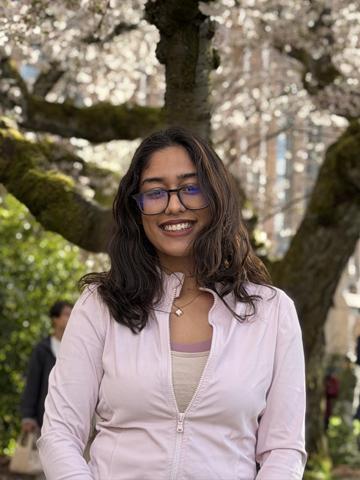
Avantika Sharma
Tell me about yourself. Where are you from and what are you studying?
I'm a second-year graduate student at UW. I'm studying Information Management with a specialization in Data Science and Business Intelligence. I'm from New Delhi in India, and I came to the States two years ago, back in 2024, to pursue this master's program. Before that, I did four years of computer science engineering in India. And then I also have a couple of years of work experience from India. After that, I decided that the next step in my journey was to come to the States, get some new experiences, go to a new country and further my education through a graduate degree.
What are you interested in doing for your career?
I want to work as a data analyst, and I've been really fortunate that while I was studying here, I was able to land an internship with UW Facilities as a business intelligence intern, and I got to work with Ryan [Hutcheson]. That really gave me hands-on experience so that while I was doing my coursework, I could also simultaneously apply it to UW Facilities. I am hoping to get a job after graduation in the same space — to be in data analytics and, as AI is booming as well, step into the AI and data field.
What did you do in your student position?
When I started out, I first worked just to understand what the current data architecture at UW Facilities looks like — so understanding what databases we have in place and what the data looks like. We do a lot of reporting on Power BI and Tableau, and there's a new data migration that we're headed towards. My first major task was to aid with some of that data migration process. I had to basically go into the Power BI dashboards and change some of the data models that are linked to some of the old database servers and do some SQL work and link it to the new servers.
Apart from that, I would just work on some smaller tasks as well, like we would get requests from stakeholders who look at the reports that we produce, change up some reporting here and there, do some visualizations of whatever asks they have. Currently, I'm closing out my internship with this data cataloging activity, and I'm also hopefully going to get a chance to present some of my findings at the BIT All-Hands next month. Ryan wants me to do an end-of-internship presentation, so I'm going to probably talk about this data cataloging activity that I do. I'm building out whatever reports we have currently and documenting the way that we standardize those particular reports so that the stakeholders know the data catalog we have.
How has this job prepared you for what's next?
I think for all the grad programs, the only hands-on experience that we get is through the projects that we do during our degree — like it's just coursework and then the projects you do, and they don't aid you in basically increasing your skillset. But I feel like getting a chance to work as an intern at UW Facilities threw me into the real world and prepared me for what I will face once I graduate. Because this is how organizations operate, right? Getting a chance to be a part of a weekly stand-up report to my manager in a one-on-one meeting where we basically co-work — I share my screen and talk through the deliverables of the week. I have three meetings every week, and then we close it out with an end-of-week touch-base meeting on Friday. So one of the things that this internship has taught me is to be accountable for the work that I do. I need to credit my manager, Ryan. He put me in charge of so many things, even as an intern. I had a lot of accountability, I had to take a lot of ownership and I think those are things that I will face in the real world as I work for a bigger corporation, a startup or any kind of organization.
Anything else we haven't talked about that you'd like to mention?
It helps that this was a remote job. I had previous jobs as a dining student assistant, and I also worked for the Disability Resources for Students center. This was my last and final job as a student, and it really gave me a lot of flexibility. It's not a physically exhausting job. In comparison, the hours are pretty flexible. I can work from home. I only have to come in once a week. Even though the work itself was challenging, the environment that I was given to work was pretty flexible and helpful to do along with my coursework, so I really appreciated that about the job.
Brandon Phung
Academic program: Undergraduate, Geography–Data Science
Where they worked: Transportation Services

Brandon Phung in Vietnam over winter break
Tell me about yourself. Where are you from and what are you studying?
I'm originally from Woodinville, Washington. I'm studying Geography–Data Science, and I'm also minoring in Informatics. I like just being outside. I do a lot of hiking and backpacking. Geography in general just stood out to me, so that was the field I wanted to be in and what I drove towards in college. I also liked STEM. Being in GIS, which I want to do after graduation, I'm able to be outside but also program things online and create a world digitally.
What are you interested in doing for your career?
I want to focus more on spatial analysis and data analytics. I like having data and then bringing it out to a larger audience. For my work here, I do mapping for parking lots. I’d like to find a job where I can take data and then visualize it.
What did you do in your student position?
I started out as field staff for Transportation Services, where I would go out with a group for events and take payments for parking for football and basketball games. And then after about a month, I got promoted to field coordinator. I'd create workflows with other staff, drive students in vans or cars to their spots, and instead of taking payments, I would handle customer service and answer any questions for people parking.
Then I moved into the GIS intern position, where I work more in the office and do what we call the map project, which is a revamp of the parking website — building it from scratch with one of the other student workers. I'm outside a lot going to every parking lot. There are around 105 parking lots, and I'm doing a 360-tour for each one. I'm able to get information on how many stalls, exits, emergency exits and ADA parking spots there are.
And then throughout the office I have a lot of other side jobs, such as helping out with the gate arms on campus. I've also helped out with random chores around the office as well as closing the building and creating signs.
How has this job prepared you for what's next?
It's prepared me a lot since this was my first job. I was able to work in an office, work in customer service and get to know students and permanent staff members, which has helped me learn how to work ethically and more professionally. I used to be really nervous and shy talking to people, but now I'm able to meet new people. And the customer service job helped me learn how to deal with difficulties with people and gave me a lot of problem-solving skills.
Anything else we haven't talked about that you'd like to mention?
My favorite part of being here has been working with the staff, like everyone in Yusuke [Ishiguro]’s office — Yusuke, Jacob [Chlipala] and other student staff. I look forward to working with them every week. I don't think there's ever been a day when I just didn't want to come in, even for the 4 a.m. shifts or the over-12-hour shifts. With early football games that start at 8 or 9 a.m., we have to beat the early people who want to go to the parking lots. For field coordinators, we have to come in an hour earlier than the field staff to prepare and get U-CARs and stuff. So there have been some early shifts, but I don't really mind. It's been really fun working here.
Brianna Blanchard
Academic program: Undergraduate, Environmental Public Health
Where they worked: Sustainability
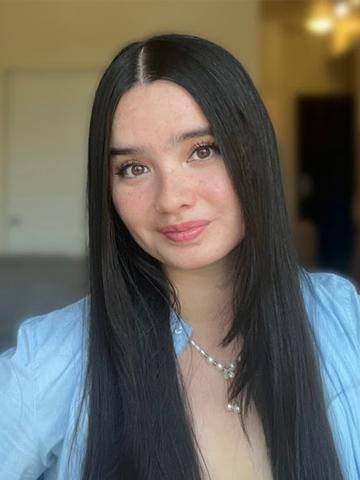
Brianna Blanchard
Tell me about yourself. Where are you from and what are you studying?
I'm from the Seattle/Shoreline area, and I'm currently studying Environmental Public Health at UW. I started in environmental engineering before switching pathways. I've always been very interested in sustainability and environmental systems and science, but then over time I realized that I really also love communications, storytelling and different types of creative work too. A lot of the experiences I've been drawn to during college have been very interdisciplinary, especially opportunities where I can combine environmental work with things like public engagement or art.
What are you interested in doing for your career?
I'm still figuring out what direction I want to go in, which I would say is both exciting but also very intimidating. I definitely plan on going to graduate school, but I want to spend at least a year or two working first and exploring different paths before deciding exactly what might fit me best.
I've thought about going back towards environmental engineering, but I also do really like environmental public health and sustainability work. I also really care about creativity and art, and I know that I still want that to be a part of my life somehow. The background that I had previously is from an art internship I've been involved in that's under the NASA Psyche mission, which has been so fun. I've really enjoyed getting to create artwork connected to science and research. So I don't know exactly what the balance is going to look like yet, but I know that whatever I do, I want it to feel interdisciplinary and connected to science but also creative and connected to people in some way.
What did you do in your student position?
I was very grateful to work as the UW Sustainability intern. My role was really broad, which I ended up really loving, because almost every week or every two weeks looked pretty different. I worked across several different sustainabilities here at UW, including the reusable cup program, which was in partnership with UW Athletics, as well as the Green Office and Green Lab programs. A big part of my role involved communications and outreach and some events. I helped create different communications materials, wrote some blogs, tabled at events like for Earth Week and also did general networking and speaking with different student organizations and other groups about sustainability initiatives that were happening on campus.
Something I'm working on right now is the Husky Sustainability Awards, helping with outreach and recording interviews that highlight the sustainability work that's being done by different students, faculty and staff across UW. I also spoke at a session of the Washington, Oregon Higher Education Sustainability Conference about the reusable cup program. That definitely helped me build more confidence with public speaking and professional communications, which are very important skills that I want to continue practicing for the future.
How has this job prepared you for what's next?
The role absolutely helped me grow a lot professionally and creatively — gaining experience with things like outreach, events support, interviewing, writing scripts and public speaking, and collaborating with a lot of different groups. My favorite part of the role was getting to meet so many different people across campus and getting to see how intertwined sustainability is and how it connects to so many different areas. A lot of it comes down to relationship building and getting people more excited and involved. It reminded me how important storytelling and communications are, because it's very important to make environmental topics feel more engaging and approachable, regardless of your audience.
I also will say, too, this role made me much more adaptable. I was constantly shifting between different projects, roles and responsibilities that I had within each of those projects. Overall, it helped me better understand the kind of work that I want to continue doing in the future, which is something interdisciplinary, collaborative, creative and connected to science in some way or another.
Anything else we haven't talked about that you'd like to mention?
This job made me a lot more hopeful, especially at a time like this, because I got to meet so many people across campus that genuinely care about creating positive change. That hope is something that people really need, and this experience reminded me that there are so many individuals putting real effort into making things better, even if a lot of that work happens quietly behind the scenes. I've been very grateful to meet so many passionate students, staff and members of the community this year that made me think, “OK, I think we actually might be okay if people like this continue to care.” Being surrounded by that type of energy and commitment was really inspiring and was very fulfilling when I've been feeling a little lost at times too.
Dzaki Pahlevi
Academic program: Masters, Mechanical Engineering
Where they worked: Campus Energy, Utilities & Operations
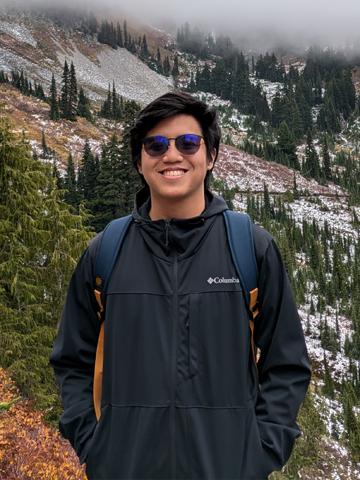
Dzaki Pahlevi on Mt. Rainier
Tell me about yourself. Where are you from and what are you studying?
I'm an international student. I came from Indonesia, and I came to Seattle nearly two years ago. I'm getting a master’s degree in Mechanical Engineering, and I came to work as an intern with UW Facilities in July 2025 in an energy engineering intern position. It matched my qualifications as a mechanical engineer, and it aligns fairly well with my studies. It's been really good.
What are you interested in doing for your career?
After I graduate, I would be very interested in applying for research positions or PhD positions in mechanical engineering. If I am able to find an opportunity for a PhD, I would probably jump straight into that. My field of research is fluid mechanics and chemical reactor design, so that's what I'm doing right now with my master's research. I'm hoping that I'll do something similar to that for my future research.
What did you do in your student position?
The position itself is under the Resource Conservation department with Norm Menter, Robert Gaynor and Erik Knownbell. The department itself is looking to manage and conserve the energy that the University is using for its buildings, especially from the usage of energy with air conditioning, heating and ventilation systems.
The main thing that I do as an intern is analysis on energy usage for the buildings. I analyzed the energy that was being used by the air conditioning systems for a lot of buildings at UW. I did some data collection and analysis about which buildings are currently using too much energy and which buildings are currently not performing enough in terms of providing comfort cooling and heating.
Recently I also made a program for fault detection. So it's sort of like being able to find which building has an energy conservation problem. Basically, the University itself already has a data collection system, and I helped put the data together and generated graphs and visuals that we can see and analyze. If a building is using too much energy or a part for the air conditioning system is broken, I'm able to detect that using the program that I made.
How has this job prepared you for what's next?
This job has certainly been really exciting for me. Definitely, it has prepared me in terms of communication. This is my first job in the U.S., and working with people in the U.S. was a new experience for me. I got a feel for the work culture and the collaboration — certainly Norm, Robert and Erik have been very helpful and have given me a lot of guidance along the way. There's also a lot of technical guidance about how to apply my mechanical engineering degree to work.
Anything else we haven't talked about that you'd like to mention?
I just would like to say how much I've really enjoyed working with UW Facilities. I've been so grateful that I came to work under Norm. He’s been a really good mentor for me. He's been really accommodating for me, and he's a really good manager, so I really like working under him. And I’m also really glad to have worked with Robert. He taught me a lot of technical skills and knowledge. He's a really knowledgeable man. Also, with Erik, he's been very helpful and accommodating. So yeah, I feel like I've learned a lot from those guys by working there.
Lee Hardisty
Academic program: Undergraduate, Visual Communications Design
Where they worked: Sustainability
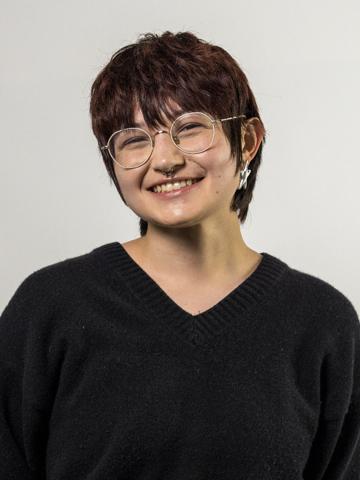
Lee Hardisty
Tell me about yourself. Where are you from and what are you studying?
I'm originally from State College, Pennsylvania, but I moved to Mercer Island when I was in middle school. From there, I went to UW so I consider myself now from the Seattle area. I'm a Visual Communication Design major at the UW with a minor in urban ecological design. I'm also the design editor at The Daily, so with all that, I’m kind of design, design, design — it's kind of defined my experience at UW. And doing design for UW Sustainability is also a big reason for that. It's been great to get the breadth of experience within the visual design world while just being at school.
What are you interested in doing for your career?
I am interested in working in the print and publication space. I've always been interested in the way that news, art and design interact. What I've always been passionate about, and what I want to do in the future, is use design to tell important stories and make sure that everyone's voices are heard. I have a deep appreciation for physical objects and making sure that physicality and print media are still preserved in a world that's increasingly all online, all digital.
And from working here, I really want to make sure that I can incorporate sustainability into the practices with print. I think they can seem at odds at first — with producing things like paper and things that can go to the landfill — but we can think about how we can preserve having real things but also still move into a more sustainable future while doing that.
What did you do in your student position?
Anything that was visual, anything that was produced and put out by UW Sustainability, I probably made in some way. We also had another designer on the team, Marilyn, who did a lot of work, but I was big on doing a lot of the student outreach: posters, maps, icons, banners, graphics, illustrations. Whatever was needed, I was able to just jump in. I did a lot of stuff for Huskies for Equitable Sustainability, which is the student outreach group. I created visuals and branding for them and more UW-branded content .
How has this job prepared you for what's next?
This job has been a great experience working in an environment that isn't so centered around my specific practice. In school, it's very much like I'm doing graphic design, everyone else around me is also doing graphic design and we're all doing the same thing together. I've really appreciated getting a diversity of perspectives working here and working with a lot of different people bringing stuff I wouldn't have thought of. Also, learning how to effectively communicate about myself and my ideas, even when we're at the beginning stages of a project, to people who aren't designers has been super valuable.
I had an internship last summer with Stanley 1913, the water bottle company, and I was definitely using skills that I had learned in my internship with UW Sustainability. I also feel like part of the reason I even got the Stanley position in the first place was because they really push sustainability as part of their business philosophy. Being able to speak about my work and experience here was really valuable to them.
Anything else we haven't talked about that you'd like to mention?
One of the things I'm going to miss the most is all my co-workers and my colleagues, who have been so kind to me, always so welcoming. Everyone's always accommodating of me being a student and having coursework. I really cherish that level of understanding. It’s been an awesome work environment and experience, and I'm really going to miss it.
Lorel Ramirez
Academic program: Undergraduate, Community, Environment & Planning
Where they worked: Surplus
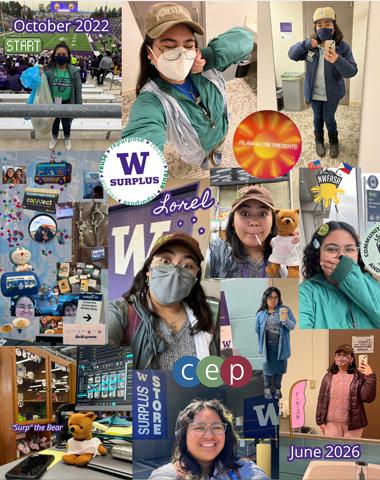
Lorel Ramirez's UW journey
Tell me about yourself. Where are you from and what are you studying?
I grew up in Kent, Washington my whole life, but I do identify as a Filipina-American. I resonate strongly with my culture, and I try to tap into those communities while I'm here. I'm studying Community Environment & Planning, which is essentially urban planning here at UW. Not to mention, I bear a great interest in languages; I’ve studied six of them, which has been helpful here. I have a better comprehension of English, Tagalog, Spanish, Mandarin and Thai — and can grasp bits and pieces of various language scripts and phrases, namely Korean and Arabic. We have a diverse group of folks who come into Surplus, and sometimes I'm able to tap into the different languages to support folks to make sure they still feel comfortable going around or asking questions.
What are you interested in doing for your career?
My big goal is to pursue urban planning in the Philippines. I had the opportunity this past summer to go back home — where I pursued a program witnessing and experiencing conditions on the ground in the Philippines alongside locals for a month. The differences in what we have access to, encompassing various facilities or community assets, opened my eyes. Drawing connections between what Filipinos experience/have access to in the diaspora versus in the homeland is a striking analysis that I hope to further delve into.
However, as I'm starting off, I’m open to building up various experiences within urban planning or cultural engagement/events in the greater Seattle area. Honing my skills and work to center various marginalized communities, and enhancing their access to assets and necessities that they need, is where I strive to steer my career direction.
What did you do in your student position?
All four years since my very first quarter at UW, I have been at UW Surplus. Starting off, I was mainly tasked with a lot of organizing and pricing. Soon after, I became our main TouchNet Online Store Publisher for about a year. Putting up posts for 100+ listings of UW Surplus’ duplicate, one-off or stand-out items, I curated a description, conducted measurements and photographed items for our online store. Cashiering, and even electronics testing, soon followed among the regular stream of organizing merchandise. Surplus offered a good balance of customer service, and it was definitely a nice contrast from our primary academic sphere, where we’re using our head a lot. The work is physical, yet therapeutic in a way, as there were enough constants to get into the rhythm of.
How has this job prepared you for what's next?
Coming to this position from high school, I was really set on doing something that I felt proud to contribute to and that aligned with my values. The circular economy that Surplus contributes to did just that. Working quite literally in a warehouse environment gave me on-the-floor experience within a snippet of the working world amid a larger urban layout grid. Being up close with the industrial items utilized in workspaces, or even educational institutions, maps out part of the story of how things flow within built spaces.
The human-to-human element in customer service comes forth when we're serving people during store day. We’re moving items and loading them into vehicles, cashiering and working with people of different backgrounds and accessibility needs. I was able to ground myself in that very welcoming environment. I always came in feeling welcome and happy to be at Surplus. They offered a nice little second home on campus.
Anything else we haven't talked about that you'd like to mention?
I really appreciate how accommodating UW Surplus has been from an accessibility standpoint. Students are empowered to ask for support in tasks like heavy lifting or if there are any tasks or situations we feel uncomfortable with. Having the discretion to pull up a chair on the warehouse floor while pricing or sorting items made doing work a lot more comfortable. My supervisors, all the way back to Becky Ryser, really made an effort to orient me well and ensure I felt settled in. It's definitely more laid-back yet still efficient compared to the pacing I hear of with other UW campus positions. I'm glad that I could communicate with my fellow co-workers and supervisors on a level playing field. Final Note: Anyone who rocks with a Steelcase Criterion Office Chair, I rock with you heavy.
Maddy Laoprasert
Academic program: Masters, Public Administration
Where they worked: Campus Sustainability Fund
Tell me about yourself. Where are you from and what are you studying?
I grew up in Englewood, Colorado, but I've been in Seattle for about nine years — so this place really feels like a home to me. My brother and parents also live in the States, while most of my extended family lives in Thailand. Right now, I'm finishing up my third and final year of my master’s in Public Administration, with a focus on social and environmental policy. I entered the program with an interest in environmental justice and community-based work, and over the past few years I've branched out to explore courses across environmental and global health, urban planning, environmental and forestry sciences, social work, anthropology, library sciences and communications. Bringing together perspectives from different fields has grown my interest in the relationships between governance, sustainability, community and storytelling.
What are you interested in doing for your career?
I'm still figuring out exactly what path I want to take, but I'm drawn to environmental justice and community engagement work, especially work that explores how different systems interact with and impact one another. It would be amazing to continue working in spaces that support community decision-making so policies better reflect the people they affect.
I’ve been working on my capstone, which centers on Tribal emergency governance and the development of a model Tribal emergency code meant to reinforce Tribal sovereignty. My favorite part of the project has been connecting with people working in Tribal emergency management roles and learning about their interests and priorities. Through these conversations, I’ve been increasingly interested in the ways different governance systems work together and how governance structures can better support sovereignty and self-determination.
I also really enjoy the creative and relational parts of community-based work such as storytelling and community care. In whatever comes next, I hope I can continue working in ways that bring these interests together.
What did you do in your student position?
I've been the Associate Program Director of the Campus Sustainability Fund (CSF) since the beginning of Fall 2024. It's been a quick couple of years. Honestly, it feels like I just started, and it’s bittersweet to be leaving. I'm going to miss this team so much.
Much of my role has centered on partnerships, programming, student engagement and broader support across the team. I connect with different student orgs, campus, community and the broader student body to help make sustainability feel more relevant and accessible to students. A large part of the work has involved expanding the way sustainability is understood and creating spaces where students from different backgrounds and lived experiences can see themselves reflected in sustainability conversations.
More broadly, I’ve supported the operations of CSF and the students involved in the program. We are a team of four staff members, and we also work closely with our two Committee Co-Chairs to support various parts of the student grant-making process. Because CSF’s programming spans so many areas, this role has given me opportunities to engage with many different parts of the organization and collaborate with many people across campus.
One of my favorite parts of the role has been helping plan and facilitate collaborative programs and partnerships. For example, we’re currently working with the Q Center and several campus organizations on the second year of the Trans Joy Project. It's been so heartwarming and rewarding to get to work alongside so many wonderful people and help build a space of community care.
How has this job prepared you for what's next?
There are so many ways. Working with the CSF team, I’ve gotten to meet many talented students with such a wide range of interests and experiences, and I feel like I'm always learning something from everybody. It’s been such a lovely space for so many different perspectives to come together and support each other through their strengths. Being part of a small team has also meant that I’ve been able to engage with many different parts of the organization, from partnerships and programming to grantmaking, budgeting, communications and broader organizational planning.
The role has reinforced just how interconnected everything is. Many of the projects I’ve worked on have begun with building trust and relationship-building, and navigating these relationships has taught me a lot about collaboration, coordination and facilitation within institutional settings. My experience at CSF has also supported my understanding of sustainability and reinforced how important storytelling is in connecting across perspectives.
Anything else we haven't talked about that you'd like to mention?
I want to thank the entire CSF community for making these last two years such an incredible experience. This includes the current team with Danny Arguetty, Karolyn Maeda and Lorenzo McCleese; last year's CSF team with Tatiana Brown, Kort Maeda and Boe Zhou; all of our committee, including this and last year’s Co-Chairs Sofia Berkowitz, Clara Kreutziger and Mazzi Nowicki; as well as everyone else who's been a part of CSF and has brought their energy and care over the years.
I also want to extend a special thank you to the many partners we have collaborated with over the past couple years. It's been such an honor to work with so many really wonderful groups and people. Building these relationships and partnerships has been among the most rewarding parts of working at CSF. I'm really excited to see what the future of CSF will look like because there is so much passion and drive amongst everyone working here. I’ll definitely be back to visit.
Risha Ashwin
Academic program: Undergraduate, Informatics
Where they worked: Business Innovation & Tech
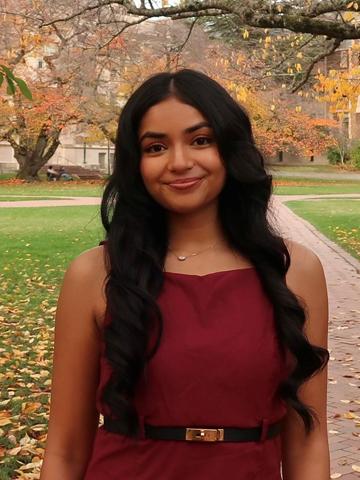
Risha Ashwin
Tell me about yourself. Where are you from and what are you studying?
I’m from Bellevue, Washington, and I’m graduating with a degree in Informatics and a concentration in Data Science. Coming into college, I knew I was interested in technology, but over time I realized I was most drawn to understanding how technology, business and people all interact with one another. I enjoy understanding how systems work behind the scenes and finding ways to make processes more intuitive, efficient and accessible for the people using them.
A lot of my growth at UW also came from the communities I became involved in. Through organizations like South Asian Student Association, Women in Informatics, Child Rights and You, and Design for America, I had opportunities to lead teams, organize events and work on projects centered around real people and real experiences. Those spaces pushed me outside my comfort zone and taught me a lot about communication, collaboration and leadership. More importantly, they helped me become more adaptable and confident in navigating situations where there is no clear answer right away.
What are you interested in doing for your career?
After graduation, I’ll be joining my family’s IT company as an IT Operations Specialist. I’m excited to work directly with clients, understand how businesses operate day to day and help improve the systems they rely on.
I also plan to continue building my real estate career as a licensed realtor. Over time, I’ve become really interested in how technology and data can help people make more informed decisions and navigate complex processes with more confidence. A lot of that perspective was shaped through projects at UW, including working on an AI-powered platform designed to help first-time renters better understand lease agreements through plain language summaries and risk detection.
What did you do in your student position?
I worked at the UW Facilities BIT Service Desk as a Student IT Assistant, where I provided front-line IT support through ServiceNow, phone, walk-in and onsite support. I helped troubleshoot devices, Microsoft 365, VPN access, printers, audio and visual systems, and other day-to-day technical issues while also handling ticket triage and escalation.
One thing I focused on during my time there was improving communication and workflows within the service desk. I noticed that ticket documentation and hand-offs often varied depending on the technician, which sometimes created confusion and slowed down issue resolution. I worked on creating more standardized ticket templates and documentation structures to make communication more consistent across the team and with users. I later had the opportunity to present those ideas to leadership, and several of the improvements became implemented in the workflow.
What I appreciated most about the role was getting to see how much operations and communication matter within IT. It taught me that even small process improvements behind the scenes can have a meaningful impact on efficiency and overall user experience.
How has this job prepared you for what’s next?
This job gave me hands-on experience working in a fast-paced IT environment and helped me become more confident in both my technical and communication skills. I learned how to manage multiple priorities at once, communicate clearly with users under pressure and stay calm while working through unfamiliar problems.
More importantly, it changed the way I think about problem solving. Instead of only focusing on resolving the immediate issue, I became much more aware of how systems, workflows and people all connect with one another. It taught me to think more proactively about how processes could be improved long-term rather than simply maintained day to day.
Since I’ll be joining my family’s IT company after graduation, this experience gave me a much stronger understanding of operations, teamwork and client support in a professional environment.
Anything else we haven't talked about that you'd like to mention?
I’ll share a favorite memory. It was my first time going off site, and I had to go help a user troubleshoot an audio issue after a Windows 11 update. I spent about two, three hours up there, and I still wasn't able to figure it out. [My boss] Ramon [Burgos] was so encouraging. He didn’t put me down, and he wasn’t disappointed that I wasn't able to troubleshoot the issue. He told me to not be de-motivated by this. It happens, you're not going to always know the solution to problems immediately. It's how you go about it, how you handle it and you try to be proactive about it.
The way that he handled the situation and encouraged me to just keep going was very impactful for me, because that's something that will happen in life. A lot of times, we're put into these situations where we're dealing with problems where we don't know the solution immediately. We have to be hands-on, explore and figure it out on the go. I feel like that's a skill that I really picked up from this job — being adaptive and having those quick-thinking skills.
Victoria Zhuang
Academic program: Undergraduate, Informatics and Geography–Data Science
Where they worked: Business Innovation & Tech

Victoria Zhuang in the Denny Hall mechanical room
Tell me about yourself. Where are you from and what are you studying?
I am from Portland, Oregon. I was born there, and I lived there until I was about nine, and then, due to my parents’ jobs, we moved to China. I lived in China for about another nine years until I graduated high school, and then I came to UW for university. I'm currently an Informatics and Geography–Data Science student here, and I think I picked both those majors because I just really like visualizing problems and putting different parts of a system together in my head, which is really satisfying to me.
What are you interested in doing for your career?
For my career, I feel like some of the possibilities are still up in the air, but I feel like because of this internship, I definitely am a lot more interested in GIS. That's what I see myself doing in the future, whether that's urban planning in any way or something environmental — or working within an organization like UW Facilities would also be a great thing to do.
Some goals that I have are to be able to use GIS to make information more visualized and accessible to more people. And this also ties into how I want GIS to be used for environmental factors, like I want possibly in the future to use GIS to help with environmentally endangered species or anything that helps to maintain an ecological system.
What did you do in your student position?
I’m part of the GIS team here. We maintain, create and organize a lot of data for UW Facilities. This isn't always visual. Sometimes we go into data analysis or data updates, but mainly, we maintain a lot of our UW maps, whether it's campus-based maps or specific UW facility service maps. We create maps for people who might need them, and then we also organize data as well.
For example, a project I worked on was when Jen [Weiss], one of the carpenters from Shop 15, came to us and was like: Hey, we currently have two scissor lifts accessible to the entirety of campus, but we're having trouble keeping track of them, because scissor lifts can go into buildings and then people who take them into buildings end up just leaving them there or they don't know how to transport them back. So it can get really confusing for other people. Jen asked us if there was a way for us to track the scissor lifts and be able to maintain a system that she and her managers could go through. So that's a map that I created for them, where I allow them to keep track of who has the scissor lift, where it's at, what floor it's on, what room it possibly could be in and who the next person who could get it is.
So that’s the GIS side of things. I'm also an operational technology (OT) intern. Cesar [Escobar] and Callie [Bianco] sometimes will take me on mechanical room tours, where I can go into the mech rooms for each building and analyze the monitors that maintain the systems there, like HVAC, air temp, water cooling, piping, sewage and a lot of those devices that are used to ensure the operations of a building.
How has this job prepared you for what's next?
First of all, it's taught me a lot of new skills that I think I wouldn't be able to get just purely through classes or education here at UW. And second of all, it's allowed me to apply a lot of the skills I've learned in class in a real setting. In classes, we don't really get that much real-world experience. A lot of it is more theoretical, and even if it is applicable, we don’t really get to see the effects that it has. It’s purely for practice. So this job has allowed me to see the effects and results that my learning has on my colleagues, other departments and myself.
Anything else we haven't talked about that you'd like to mention?
I think other than that, not much. I just enjoy working here, and this has been a really great internship. I love everybody on my team, and they've helped me a lot. I'm just really grateful for the experience.